Planning your visit
The Istrian peninsula sits at the northern end of the Adriatic, and its landscape changes quickly. On the western coast, fishing towns and harbours are threaded between resorts and rocky bays. In the south, Pula's Roman inheritance sits beside a modern working city. Inland, the roads rise to stone settlements, vineyards, wooded valleys and the food-growing countryside. The eastern shore looks out towards Kvarner, with a different rhythm from the better-known western tourist strip.
Calling Istria “Croatia's Tuscany” is an easy shortcut, but it misses the point. Its cultural layers are distinctly Adriatic: Roman, early Christian, Venetian, Habsburg and Croatian traditions intersect here, alongside a long-standing Italian-speaking heritage. This is not a single resort destination. To enjoy it properly, decide how much of your trip will be about towns, beaches, food and inland exploration, and choose a base accordingly.
> The short verdict: Istria is excellent for independent road trips, slow food travel, historic towns and mixed beach-and-culture holidays. Three days cover a small introduction; five to seven days allow a satisfying regional visit. A car is especially useful inland, but a well-chosen coastal base can work without one.
Istria at a glance
| Planning question | Editorial recommendation |
|---|---|
| How long? | Three days for two main towns and a little inland travel; five to seven for a fuller circuit |
| First-trip base without a car | Pula, Rovinj or Poreč, depending on confirmed connections and interests |
| Best for iconic old-town atmosphere | Rovinj |
| Best for Roman history and transport practicality | Pula |
| Best for historic centre plus family/resort options | Poreč and its surrounding coast |
| Best for outdoor walking and viewpoints | Inland hill towns, Učka area and designated coastal paths |
| Best for local food and landscapes | Inland Istria and agricultural villages |
| Car necessary? | Not for every stay; strongly helpful for several hill towns and dispersed bays |
| What changes most | Tickets, parking and access rules, boat departures, seasonal attractions and restaurant hours |
Choose a region, not just an accommodation rating
Istria is large enough that staying in the wrong place can absorb your holiday in car trips. The most popular west-coast towns are not interchangeable; each solves a different travel problem. A hotel close to Rovinj's old harbour suits evening walks. A property near Pula's transport links may serve a visitor without a car better. An inland villa is beautiful for a group with vehicles, but a poor choice for a traveller expecting daily beach access on foot.
| Area | Best for | Be aware of |
|---|---|---|
| Rovinj and surroundings | Romantic old-town evenings, art, coastal walks | Tight historic lanes, premium summer accommodation, limited central parking |
| Pula | Roman heritage, transit links, southern Istria | City environment rather than a single beach resort |
| Poreč | Historic sights, coastal holiday infrastructure, families | Resorts and old town can be separated by considerable distance |
| Fažana / Brijuni gateway | Quieter harbour base and organised national-park visits | Boat slots and peak-season parking require planning |
| Medulin / Premantura | Swimming, coastal nature and south-Istrian outings | Crowds and access rules vary by bay and season |
| Motovun / Grožnjan / Buzet area | Villages, food, walking and wine country | A car is often the practical default |
| Labin / Rabac / eastern coast | Different coastal scenery and a more separate-feeling base | Longer drives to western-Istrian landmarks |
The official Istria Tourist Board lists the main destinations and their different identities. Official Istria destinations.
The essential towns and landscapes
1. Rovinj: the old town worth slowing down for
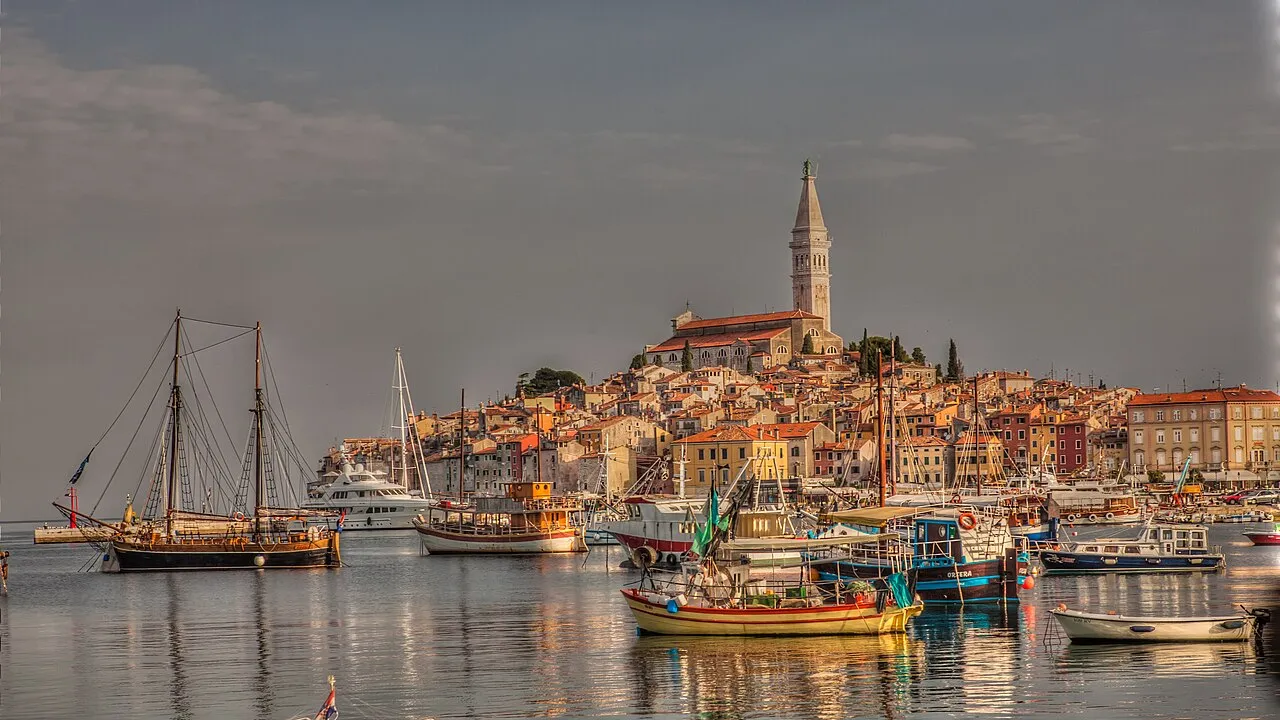
Rovinj is among Istria's most atmospheric coastal towns. The historic centre rises on a compact peninsula, its narrow streets leading towards the Church of St Euphemia. Streets can be steep and stone-paved, with views opening unexpectedly between houses. This is a place to linger rather than approach as a rapid photography stop.
Come early if you want relative calm, but do not overlook the evening when waterfront life gathers momentum. Explore the harbour, the old streets and nearby coastal walking areas; allow a separate block of time for swimming. The shoreline is often rocky or pebbly rather than an easy sandy beach. Families with small children and travellers with limited mobility should look at particular bathing spots, not just “Rovinj beaches” as a group.
Where to stay: central Rovinj is excellent for a pedestrian holiday if you travel light. For parking, resort facilities and regular swimming, examine locations outside the oldest core. Confirm the actual route from the parking place to accommodation before booking.
2. Pula: the Roman city that deserves a whole day
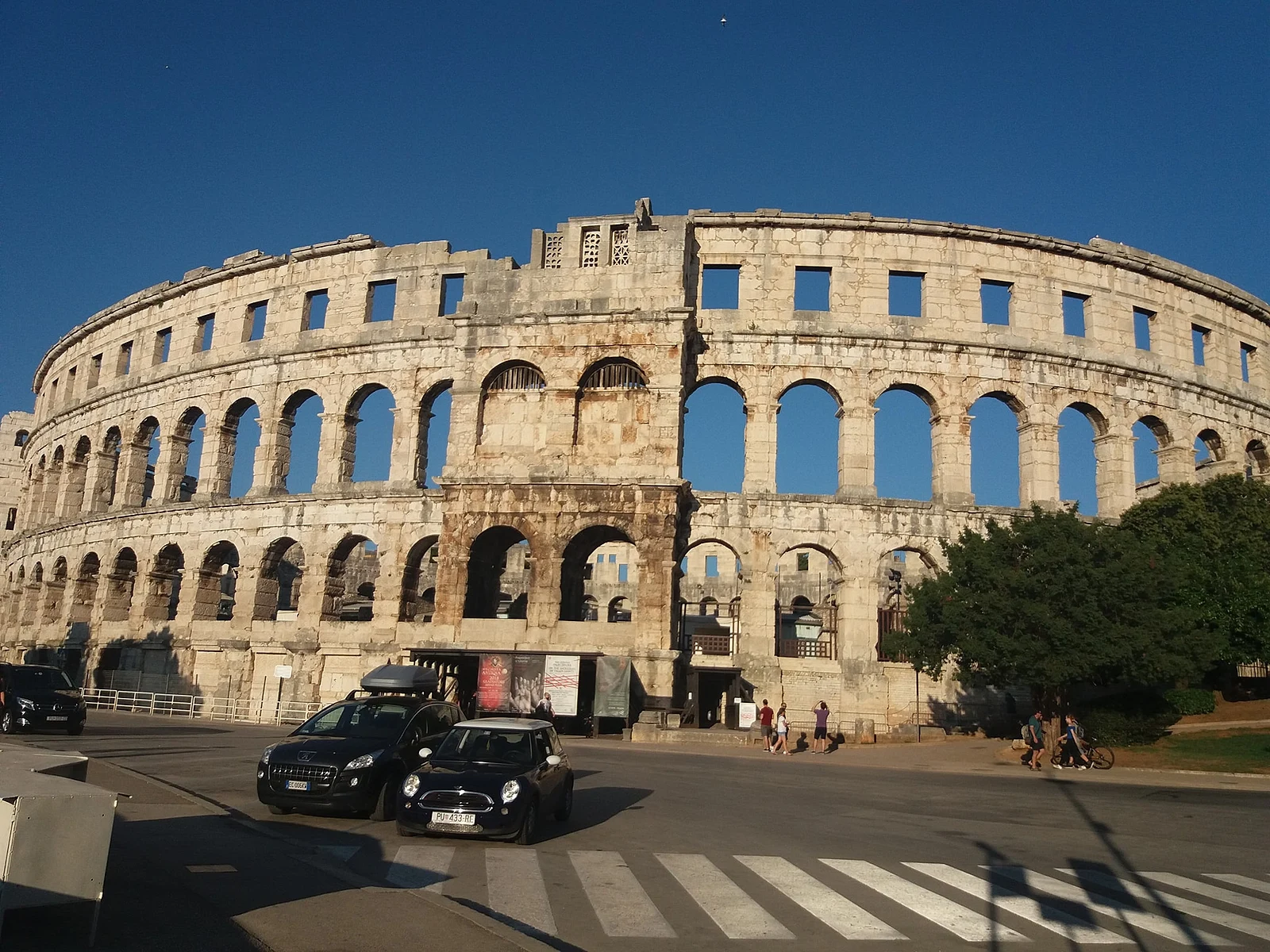
Before visiting Pula Arena: Do not assume the ticket office stays open until the amphitheatre closes: the official visitor page says ticket sales end one hour earlier. Concerts, rehearsals and stage setup can also change access; check the date rather than relying on a generic opening-hours table. The monument is described as partly accessible to visitors with disabilities, with a separate accessibility map. Confirm the latest arrangements on the Arena’s official visitor-information page.
Pula is more than the backdrop of its amphitheatre, though the Arena is unquestionably a major monument. The city also offers Roman-era remains such as the Temple of Augustus, historic gates, public spaces and a lived-in urban centre. Resist the temptation to rush in for one photograph and leave. Taking time to see how the monuments relate to today's Pula makes the visit far richer.
The Arena is a heritage venue with ticketing arrangements and occasional events, so check current access rather than assuming the interior is open at all hours. Pula's urban areas are not the same as the better-known beach zones around Verudela, Stoja and surrounding settlements. A car, bus or well-planned walk may be needed depending on accommodation.
Pula also works as a practical base for southern Istria and some travellers using public transport. That advantage matters more than whether its historic waterfront feels as photogenic as Rovinj. Official regional tourism guide.
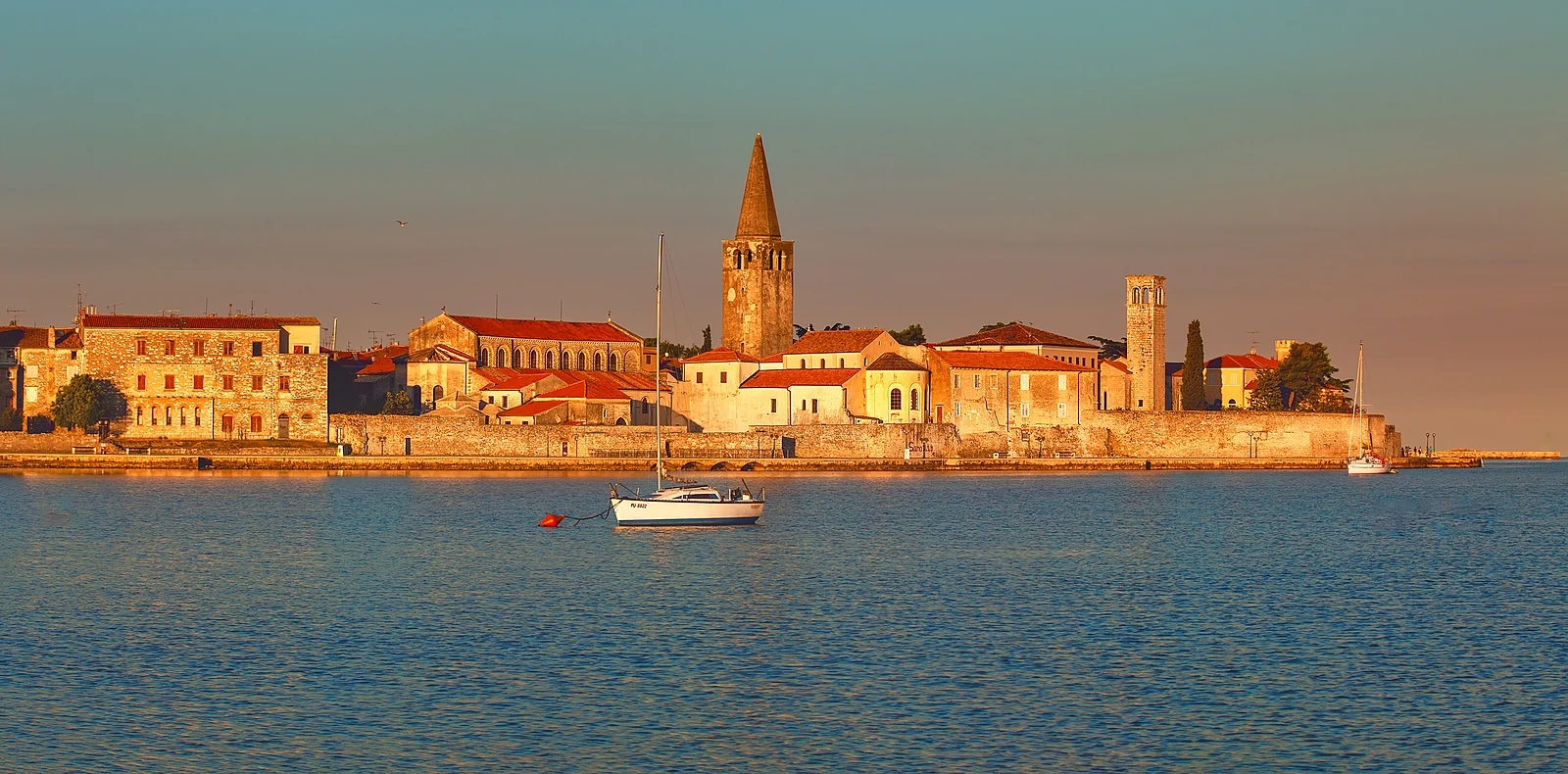
3. Poreč: remarkable early Christian heritage
In Poreč, the major cultural highlight is the Euphrasian Basilica complex, a UNESCO World Heritage site. Its importance comes not from a romantic marketing label, but from the exceptional survival of an early Christian episcopal ensemble, including the basilica, baptistery, atrium and related buildings. The mosaics and architecture reward a visit even if you are otherwise travelling mainly for beaches. UNESCO: Euphrasian Basilica.
Poreč's old town is walkable, while surrounding coastal accommodation areas range from campsites to family hotels and holiday complexes. Make sure a property marketed as “Poreč” is actually within easy reach of the historic centre if you want dinners and walks there without driving.
4. Motovun and the inland hill towns
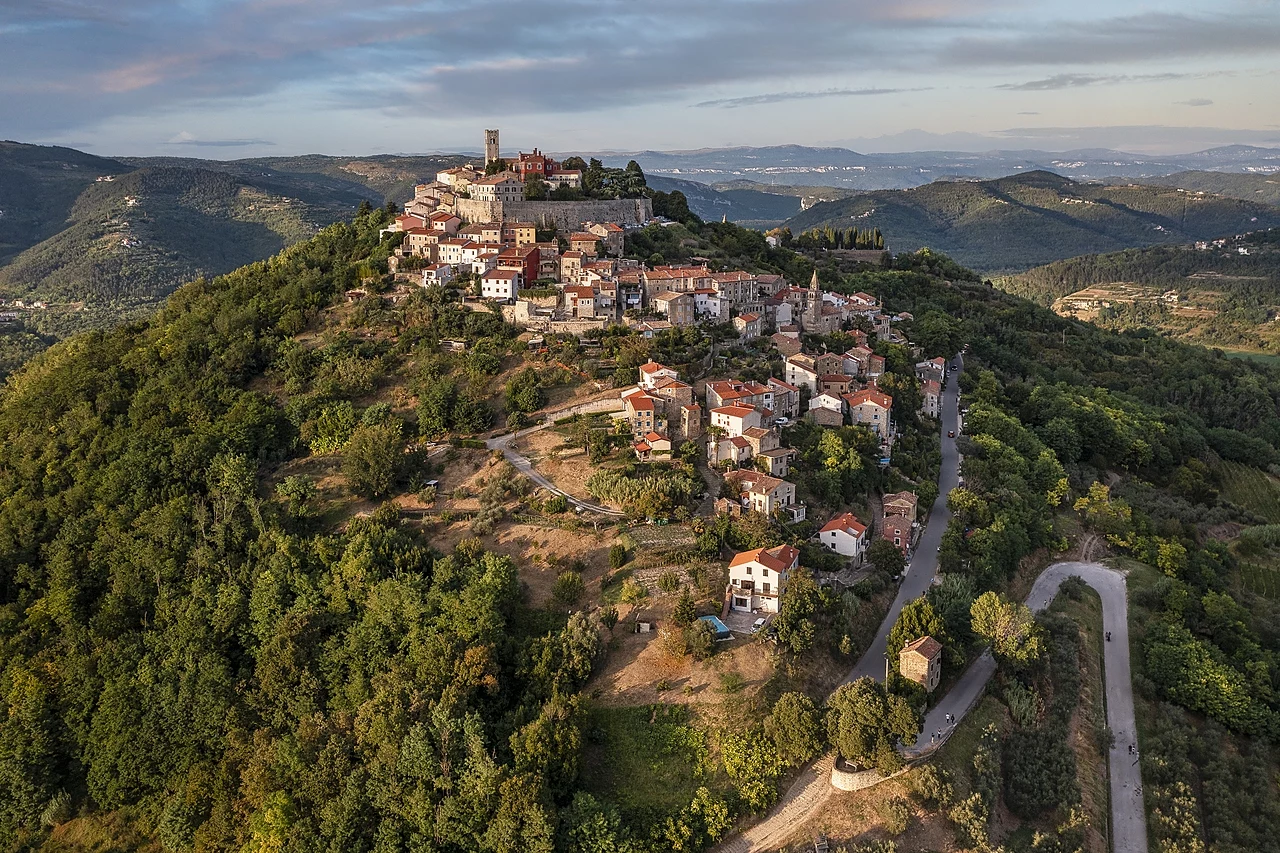
Motovun rises above the Mirna valley, one of the region's most recognisable inland views. Narrow lanes, surrounding countryside and a strong food identity make it a worthwhile excursion. Grožnjan is known for artistic life, galleries and intimate streets. Buzet and its surroundings are associated with inland Istrian food traditions, while places such as Hum, Bale and Pazin add different historical and landscape experiences.
Do not treat all these towns as interchangeable stops on a “five villages in five hours” itinerary. Hilltop access often involves steep walking, summer heat and parking outside the oldest streets. Choose two or three with enough time for a slow lunch or a walk. Avoid repeating the tourist slogan that Hum is indisputably “the smallest town in the world”; it is a local nickname rather than a useful geographic fact.
5. Brijuni National Park: an island day with structure
What the Brijuni ticket actually buys: An official excursion to Veliki Brijun can include the return boat from Fažana, a guided visit and a programme on the island; formats differ from independent coastal cruises that merely pass by the archipelago. Choose the specific programme and departure before paying. Some reduced-fare visitors are instructed to book through the park office rather than simply buying a standard online ticket. Read the National Park’s FAQ and visit options.
Brijuni National Park lies off the coast near Fažana, from which the official park's boat service connects with the island visitor programme. The operator lists a typical boat journey of approximately 15 minutes, but timing, ticket formats and programmes must be checked for the chosen day. Brijuni: how to visit · Official boat schedule.
An organised park visit is not the same as an independent beach ferry. Review what the ticket includes, how much time you can spend, and whether guided activities or transport on the island are part of the programme. Follow protected-area rules and do not improvise restricted routes. In peak season, reserve early enough to secure the departure you actually need.
6. Cape Kamenjak and southern coves
The southernmost coastal landscapes around Premantura and Cape Kamenjak offer swimming, viewpoints and a more rugged atmosphere. Beautiful photographs can hide practical issues: exposed sun, rough tracks, limited shade, controlled access or sensitive protected habitats. Check current entry conditions and designated routes before travelling, especially if you are bringing a car or cycling.
Think of Kamenjak as a half-day or longer outdoor excursion, not a tiny stop between two museums. Water shoes may help on rocky access points, and having drinking water is important away from built-up resort areas. Avoid treating unofficial cliff jumps or unmarked paths as standard recommendations.
7. The east coast: Labin and Rabac
Labin sits above the coast with an appealing older centre; Rabac below is a beach-oriented settlement. This combination allows a different regional itinerary from the familiar Rovinj–Pula–Poreč triangle. The east coast can be an enjoyable place to base a longer stay, but check driving times to west-coast attractions before booking a holiday that relies on daily cross-peninsula trips.
Food is not an optional extra in Istria
Istrian cooking reflects its agricultural landscape and the Adriatic: olive oil, seasonal vegetables, pasta, seafood, wine and dishes built around inland ingredients. The region's reputation for truffles, especially in the interior, is a genuine part of its food tourism, but not every menu item labelled “truffle” offers the same ingredient or quality. Ask what is actually used, particularly when paying a premium.
Malvazija Istarska and Teran are distinctive wine names to look for. Smaller wineries and olive-oil producers can add depth to a road trip, but their visiting arrangements vary. Do not assume spontaneous tastings or English-speaking tours are available every day. Book when necessary and use a designated driver or prearranged transport.
Restaurants in Rovinj's prime waterfront locations are not directly comparable with family-run inland dining. For budgeting, separate the food experience you actually want: quick lunch, tasting menu, winery visit or relaxed konoba meal. A generous lunch in the countryside can be a destination in its own right—so long as it fits your route and travel companions.
Beaches: understand what Istria's coast is like
Istria has beautiful places to swim, but its coastline is often rocky, pebbly or built around bathing platforms, not uninterrupted sand. For families, this distinction affects everything from footwear to whether a child can enter the water comfortably.
Around Rovinj, look at the exact beach section near your accommodation. In southern Istria, Medulin and surrounding areas offer a variety of beach settings, including sections of shallower water and sand, while other spots are rocky and exposed. Around Rabac, clear-water pebble beaches are part of the appeal. Not all attractive coves have organised facilities, shade or easy accessibility.
If someone in your group has mobility needs, check the route from car park or hotel to water level, any handrails, toilet access and on-site equipment. A beach that is visually beautiful may still be a poor match for the travellers you are planning for.
Getting around Istria
By car
For a multi-town itinerary, a car is usually the most flexible choice. It allows a morning in an inland village and an afternoon on the coast without being limited to infrequent cross-regional bus services. That flexibility has costs: summer parking, restricted historic centres, narrow streets and occasional toll-road charges. Check whether accommodation parking is included; never assume an apartment in a car-free centre has a space nearby.
Without a car
A car-free Istria trip can work if you commit to one or two coastal bases and build the itinerary around realistic coach routes. Pula is often practical for connections, while Rovinj or Poreč can work for local exploration and selected intercity journeys. But hilltop villages such as Motovun and Grožnjan do not necessarily have frequent, useful services for a casual day trip. Consider an organised inland excursion instead of relying on a return bus that may not exist at the right hour.
By air and from neighbouring countries
Depending on the season and origin, visitors may arrive via Pula Airport or approach overland through Slovenia, Italy or other parts of Croatia. Confirm border documents and road-toll rules for your actual route. Do not promise a specific international airport transfer without checking the relevant operator and timetable.
By boat
Some coastal tours and park boats operate seasonally. Brijuni access is a specific national-park programme from Fažana, not a generic ferry with unlimited island hopping. Other pleasure cruises may be purely sightseeing excursions. Compare what is included and whether the trip goes ashore before booking.
Itineraries that respect driving time
Three days: an excellent introduction
Day one — Rovinj: Arrive, explore the old town, enjoy the waterfront and make time for swimming or a coastal walk.
Day two — Pula: Spend a proper morning among the Roman remains and the town, then choose an afternoon coastal stop or an unhurried meal.
Day three — One inland area: Choose Motovun and a nearby village or a countryside tasting. Do not attempt to cover every interior settlement in one day. This itinerary works best with a car; without one, substitute a well-organised excursion.
Five days: balance the peninsula
Day one — Rovinj: Historic centre and coast.
Day two — Poreč: Basilica complex and old town, with time for a swim or coastal path.
Day three — Inland Istria: Motovun, Grožnjan and a food-focused stop, organised geographically rather than by a checklist of popular names.
Day four — Pula: Arena, Roman heritage and one carefully chosen surrounding neighbourhood or beach.
*Day five — Brijuni or Kamenjak:* Pick the national-park island programme or a southern-coast day, depending on interests, ticket availability and weather. Both deserve proper time; doing both is not the aim.
This sequence can be rearranged around your accommodation base and travel direction. For most visitors, one or two bases are enough; frequent hotel changes consume time without improving the trip.
Seven days: give the region room to breathe
Use the five-day plan as a framework. Add an east-coast day around Labin and Rabac, then keep one flexible day for weather, cycling, olive-oil or wine visits, or simply staying on the beach. Seven days should feel more relaxed than five—not like an obligation to squeeze in two extra museums.
If you have only two days and no car
Choose one strong base. Pula offers a compelling city-and-Roman-history stay; Rovinj offers the waterfront atmosphere many first-time travellers associate with Istria. With public transport, verify one side trip before assuming a coast-to-coast tour is straightforward.
A little about history—and why it matters here
The region's cultural depth is a practical part of what visitors see. Pula's Roman monuments reflect the ancient urban landscape. Poreč's UNESCO-listed episcopal complex demonstrates early Christian continuity. Venetian-influenced coastal towns, later Habsburg and modern development, and the living languages of the peninsula create a different atmosphere from southern Dalmatia. In the countryside, agricultural practices connect village landscapes with everyday food traditions.
A good visit does not require a lengthy lecture or pretending every stone belongs to one era. It does require noticing that the Arena, a medieval hill town and a twentieth-century coastal resort tell different stories. Let those contrasts guide the itinerary rather than chasing only famous photography spots.
Budget without misleading averages
Istria cannot responsibly be reduced to a single daily price. A week in a waterfront hotel during a high-demand summer period costs differently from an inland apartment outside the busiest months. A day exploring towns on foot costs differently from a Brijuni programme, a car hire, tolls and a private wine excursion.
Build a budget in five categories: accommodation, car/public transport, food and drinks, paid sites/parks, and optional excursions. Compare parking fees and the cost of moving between towns before accepting a cheaper but remote apartment. Attraction tickets and restaurant menus should be verified for the actual travel date, not lifted from a past-season blog post.
If your main wish is to spend time on the beach, a centrally located coastal property may be better value than an inland villa that requires a daily drive. If you want food, wine and quiet countryside, the inland choice may be the point of the journey.
Practical planning for different travellers
Families: Consider Poreč's surrounding holiday zones, selected Medulin areas or other properties with confirmed, safe swim access and facilities. Evaluate the precise beach, not the destination's general reputation. A hilltop apartment with many stairs might be unsuitable with a pushchair.
Travellers with limited mobility: Historic centres commonly have cobbles, slopes and steps; Brijuni park programmes and nature areas have their own access arrangements. Ask attraction operators for specific accessibility information, and confirm parking-to-room access with accommodation providers.
Food enthusiasts: Reserve a day inland rather than fitting a tasting between two distant beach stops. Distances may be modest but winding roads, parking and long lunches matter.
Visitors in spring or autumn: Sightseeing and food travel may be particularly rewarding when swimming is not the dominant activity. Check seasonal operation of boat services, tourist facilities and attractions, especially outside weekends.
Travellers without a car: Stay close to actual transport stops rather than relying on a listing saying “public transport nearby.” Confirm both outward and return journeys before buying a day-tour ticket.
Common Istria mistakes
- Comparing Rovinj, Pula and Poreč as if they offer the same holiday.
- Booking an inland villa while expecting to walk to the sea.
- Treating every Istrian beach as sandy or easy to access.
- Combining Brijuni, Pula and Cape Kamenjak into an overloaded single-day itinerary.
- Visiting six hill towns without time for a relaxed walk or a meal.
- Assuming there is a useful public bus for every scenic village.
- Driving after wine tastings rather than arranging safe transport.
- Treating heritage sites as guaranteed open on a particular day without checking.
Istria questions answered
Is Istria good for a first visit to Croatia?
Yes, particularly if you enjoy historic towns, varied food and a mix of coastal and countryside travel. It is not an exact substitute for the Dalmatian islands: the travel style and landscapes differ, which is part of its appeal.
Where should I stay: Rovinj, Pula or Poreč?
Pick Rovinj for atmosphere and wandering, Pula for Roman heritage and transport, or Poreč for heritage paired with developed coastal holiday facilities. With a car, consider an inland base if food and quiet are priorities.
Can I do Istria without a car?
Yes if you choose a walkable coastal base and limit the number of dispersed attractions. For several hill towns, small wineries and remote coves, a car or organised outing makes the schedule more reliable.
How many days are enough?
Three days give you an introduction; five allow the key heritage towns and one inland or island excursion; seven make the trip relaxed enough to include different coasts and downtime.
Is Brijuni a normal ferry day trip?
No. Treat the park visit as an organised protected-area programme with defined departures and access rules. Reserve or check the exact ticket format and schedule directly with the park authority.
Is Istria best in July and August?
Those months can suit swimming, but also bring heat, high demand and more crowded roads and historic centres. Spring and autumn can work very well for walking, towns and food-focused itineraries, with the caveat that some services are seasonal.
The Smart Croatia Travel verdict
Istria rewards people who travel with curiosity, not urgency. Choose a base according to the holiday you want, spend proper time in two or three remarkable towns, and leave room for the countryside and the sea. The region is not at its best when you collect place names; it is at its best when you begin to see how they belong together.
Check opening hours, fares, tickets and operating notices with the official sources for your travel dates.